
News - Venezuelan Oil: Opportunity or Illusion?
Business Strategy
Venezuelan Oil: Opportunity or Illusion?
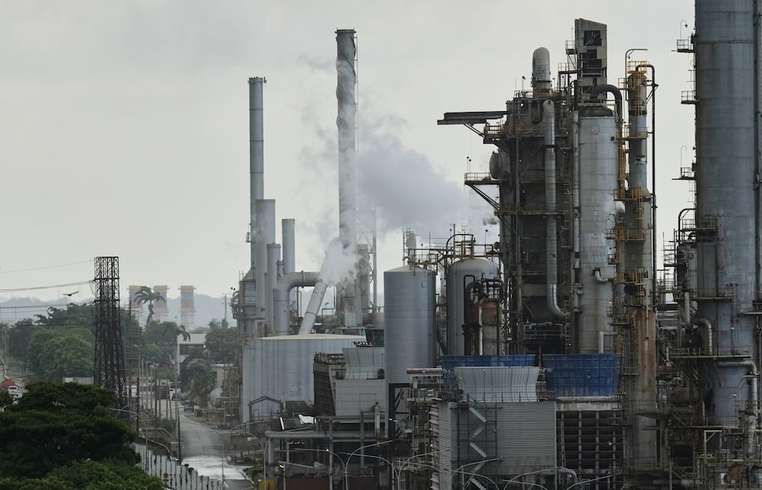
The recent diplomatic efforts by President Donald Trump to free Venezuela from Nicolás Maduro’s control have sparked optimism about American energy companies potentially accessing Venezuela’s extensive oil reserves, the world’s largest. However, expectations of quick profits face significant challenges; experts caution that it could take more than a decade to revive the country's oil industry successfully. Currently, the global oil market is flooded with crude, with Brent and West Texas Intermediate prices reaching historic lows. The market has an excess supply of 2 million barrels per day, overshadowing Venezuela's current production of 900,000 barrels daily. Even if production were to rise to 3 million barrels per day, Venezuela would still be a relatively minor player in the market. In the short term, if an agreement for 50 million barrels from Venezuela to be delivered to Gulf Coast refineries is successful, the U.S. could see a slight decrease in gasoline and diesel prices. This is due to roughly 70% of U.S. refining operations being optimized for the heavy crude type exported by Venezuela. However, achieving such a sustained benefit requires a long-term supply commitment. The impact would also affect Canada, which might see reduced heavy crude exports, and smaller Chinese refiners could face higher costs if they lose access to Venezuelan oil. Revitalizing Venezuela’s deteriorated oil sector poses enormous challenges. The state-run PDVSA's history of corruption and neglect has left the infrastructure in poor condition. Energy analysts at Rystad Energy estimate that $183 billion and over a decade are necessary to revitalize production to 1990s levels. Further complicating matters, oil in the rich Orinoco Belt is particularly viscous and high in sulfur, requiring significant investments in specialized extraction, transportation, and refining technologies—an expensive undertaking compared to America’s lighter shale oils. Rystad estimates the break-even price at about $80 per barrel, much higher than the current pricing benchmarks of $60 for Brent and $56 for West Texas Intermediate. Political instability adds another layer of complexity. With the onset of expropriation policies in the mid-2000s, U.S. companies like ExxonMobil and ConocoPhillips exited the Venezuelan market, suffering over $10 billion in losses. Energy executives repeatedly stress that stability and strong legal frameworks are vital for investment decisions. Chevron, the lone American company still operating in Venezuela, is cautiously watching the changing landscape, with 3,000 employees ready for potential expansion. Predicting Venezuela's political direction or the success of President Trump's venture is speculative. While the aim of securing American energy dominance is evident, political obstacles and market conditions could hinder these goals. Bernard L. Weinstein, reflecting on his credentials as an applied economics professor emeritus at the University of North Texas and former associate director of SMU’s Maguire Energy Institute, provides these insights as a fellow of Goodenough College, London.
About usyoo

Categories
Tags