
News - Canada on Alert Over US Intentions Amid Rising Tensions
Business Strategy
Canada on Alert Over US Intentions Amid Rising Tensions
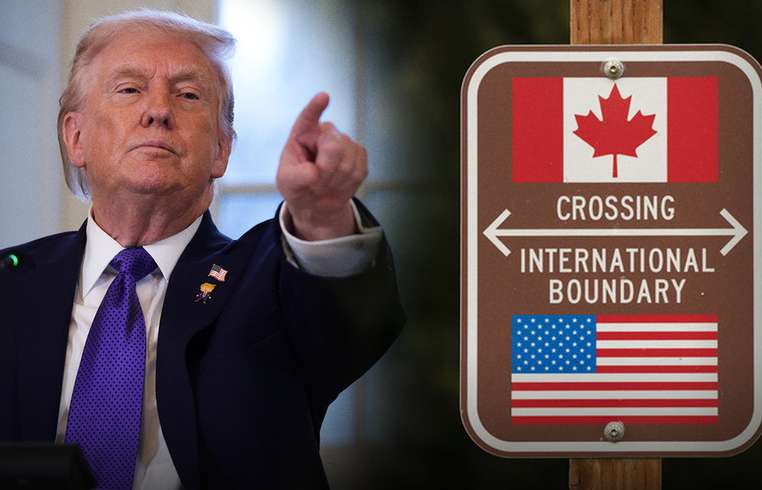
Amid escalating geopolitical tensions, Canada is warily eyeing its southern neighbor, the United States, with increasing concern. The alarm follows unsettling developments such as the shocking abduction of Venezuelan President Nicolas Maduro and provocative statements from US President Donald Trump about acquiring Greenland. A recent column in Canada's Globe and Mail newspaper has gone viral, warning of potential US military coercion against Canada, citing Trump's previous musings about making Canada the 51st state as a chilling possibility. Authored by Adam Gordon, a former foreign affairs adviser, and Thomas Homer-Dixon, a notable academic, the column suggests that just as international law failed to protect Venezuela, Canada might also be vulnerable. The writers raise the specter of the US leveraging military might to commandeer Canada's rich oil resources. These fears are compounded by allegations of US political interference to bolster separatist movements in Alberta, Canada's oil-rich province. Allegedly, Jeffrey Rath, one of the prominent figures in the Alberta separatist movement—which entertains notions of joining the US—has had conversations with US State Department officials who are sympathetic to his cause, although Rath has kept their identities undisclosed, and the State Department remains tight-lipped. The authors implore Ottawa to make it unequivocally evident that any infringement upon Canadian sovereignty would incur tremendous costs for the US. They urge Canada to bolster its national service, invest in homeland defense, formulate a robust national drone strategy, and hasten the development of indigenous defense industries. Looming large over these tensions is the economic pressure Trump has persistently applied over the past year, illustrated by the imposition of tariffs reaching up to 35% on a broad spectrum of Canadian goods, with threats to widen their scope. Trump's Administration has rationalized these measures by alleging Canada's exploitation of US trade. In efforts to mend relations, Canadian Prime Minister Mark Carney has rolled back some retaliatory tariffs instigated by his predecessor and increased defense spending. Despite these efforts, many experts caution that such concessions may compromise Canada's sovereignty. Philippe Lagasse, a professor at Carleton University, voices a stark warning, hypothesizing that Canada could devolve into a 'tributary' state in the shadow of its powerful neighbor, hinting at a reality already in motion: "Are we already a vassal state, and we just won’t admit it to ourselves?" he provocatively questions in commentary to Bloomberg.
About usyoo

Categories
Tags