

News - Lake Superior State University Unveils 2025's Top Banished Words
Business Strategy
Lake Superior State University Unveils 2025's Top Banished Words
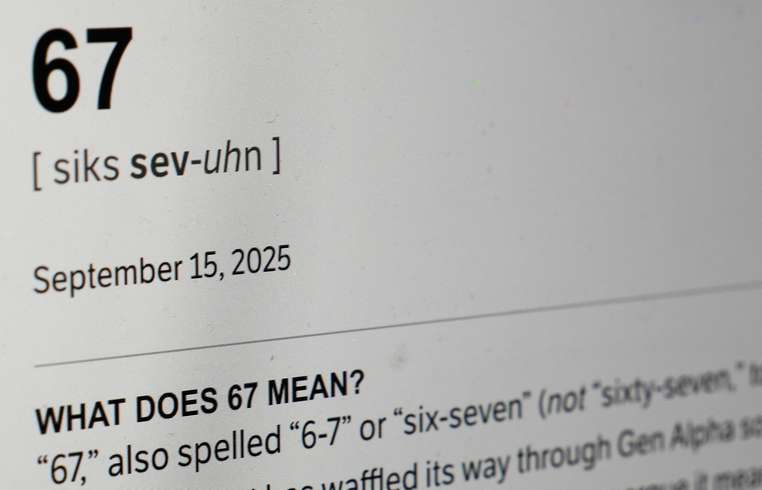
In its 50th iteration, the annual 'Banished Words List' by Lake Superior State University highlights the evolution of language, identifying words and phrases that are deemed overused, misapplied, or lacking in substance. This year, '6-7' takes center stage, a phrase that has puzzled and intrigued many, especially the Gen Z demographic. Gaining popularity over the summer due to social media's mysterious influence, its precise meaning remains unclear—a whimsical blend and inside joke even incomprehensible to its own users. The list, which started as a playful New Year's Eve idea in 1976, continues to garner significant attention, with over 1,400 submissions from around the world, including countries like Uzbekistan, Brazil, and Japan. Alongside '6-7,' entries include words like 'demure,' 'incentivize,' 'gift/gifted,' and perennial favorites 'my bad' and 'reach out,' both of which have appeared on the list in previous decades. '6-7,' Dictionary.com's word of the year, illustrates the peculiar influence of digital conversations on current vernacular, resulting in terms that are widely shared but scarcely understood. Whether it's the numbers six and seven being used in speech or action—like fans cheering at a basketball game with a score—they resonate despite their elusive origins. David Travis, the President of Lake Superior State University, associates these fleeting linguistic trends with broader communication changes driven by technology, where tone and subtlety are often overshadowed by text-centered culture. It's in this environment that trends emerge, transforming short-lived expressions into cultural landmarks. While '6-7' might soon disappear, as Travis predicts, the list prompts broader reflections on the cyclical nature of language. Words like 'cooked,' denoting finality, gained attention this year, yet phrases like 'at the end of the day' persist indefinitely. Alana Bobbitt and Jalen Brezzell, university students who use some of these debated terms, exemplify the generational gap in language use. For some, '6-7' and 'cooked' offer fun and novelty; for others, their humor and functionality are unclear. This half-century tradition of cataloging words remains a source of amusement and engagement for people worldwide, reminding us of the constant ebb and flow within our always-evolving linguistic landscape.
About usyoo

Categories
Tags