

News - Within the framework of the serosurveillance program for the pest of small ruminants, blood sampling activities have begun.
Business Strategy
Within the framework of the serosurveillance program for the pest of small ruminants, blood sampling activities have begun.
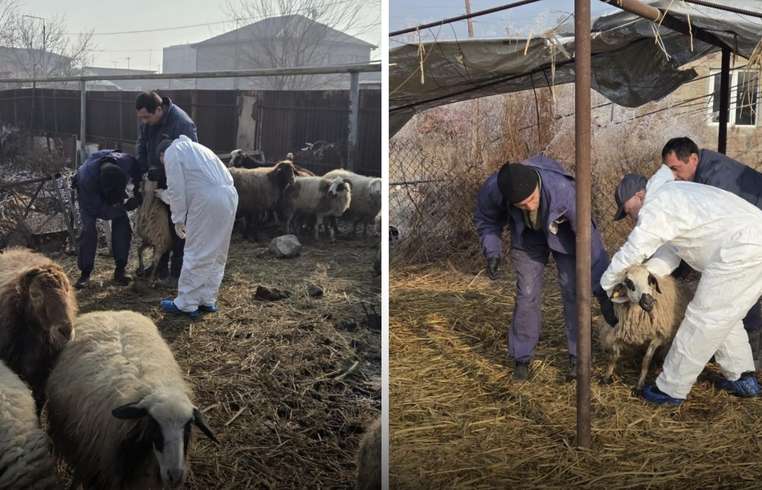
Within the framework of the serological screening program for small ruminants' plague disease, blood sampling activities have commenced. The Food Safety Inspection Body has announced that since December 2025, in collaboration with the Agricultural Services Center SNCO, blood sampling activities for small ruminants have been carried out within the communities foreseen in the 'Program for Serological Screening of Small Ruminants' Plague Disease in the Republic of Armenia.' The results obtained from laboratory tests of the sampled blood will be periodically presented to the World Organisation for Animal Health (WOAH) to recognize the Republic of Armenia as a country free from the PPR disease. Plague of small ruminants (sheep, goats) is an acute and subacute viral disease characterized by high fever, ulcerative lesions of the nasal and oral mucous membranes, hemorrhagic inflammation of the intestines and lymphatic systems, bloody diarrhea, keratitis, and pneumonia. Considering the epidemiological situation in the region and the fact that the Republic of Armenia is in a high-risk zone for the introduction of this disease, the serological screening program for small ruminants' plague disease will last at least three years, with an annual possibility of review based on data analysis. The objectives of the program are: ▪️ To assess the potential risks of disease introduction; ▪️ To ensure epidemic stability concerning PPR; ▪️ To contribute to the process of recognizing the Republic of Armenia as a country free from PPR disease. Note: In 1940, this disease was initially identified in Africa as rinderpest for large animals. However, considering the immunobiological characteristics of the virus, it was officially recognized as a small ruminants' plague disease at an international conference held in Nigeria in 1980. The pathogen of the plague is destroyed within 5-10 minutes at 60° C. At low temperatures, around -20° C, the virus is preserved for 4-7 months. In conditions of 25-30° C, the pathogen remains viable in the animal carcass for 20-30 hours. The virus remains viable in dung for up to 30 hours, and on pasture grounds, up to 36 hours. The virus can remain viable in the minced meat of infected or sick animals for 28 days. The clinical signs of the disease include a decrease in appetite, a rise in temperature to 41-42.5° C, laryngopharyngitis, purulent, bloody diarrhea, breathlessness, and acute pneumonia. This disease does not pose a danger to human health. The economic damage caused by the disease arises from the decline in animal populations (50-100%), a decrease in milk yield, weight loss, and wool loss," the message states. If you find an error, you can send it to us by selecting the error and pressing CTRL+Enter.
About usyoo

Categories
Tags