
News - Moscow Discusses Strategic Responses to High-Profile Military Assassinations
Business Strategy
Moscow Discusses Strategic Responses to High-Profile Military Assassinations
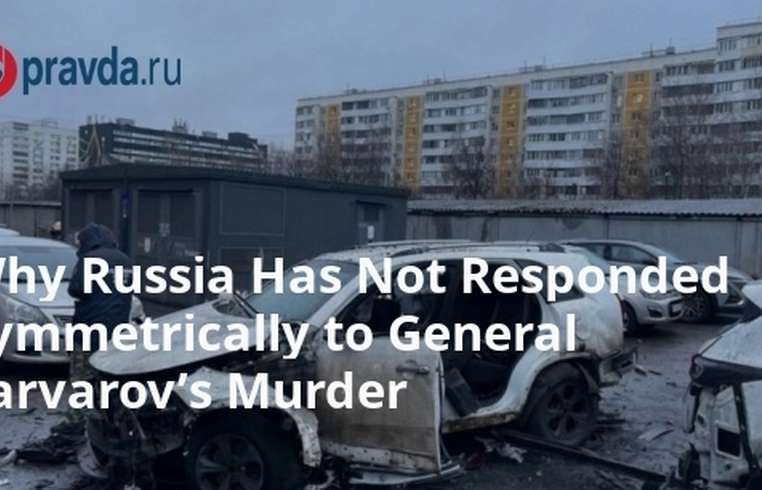
The recent murder of Lieutenant General Fanil Sarvarov in Moscow has sparked heated discussions among Russian political and military circles about the country's approach to targeted assassinations of its senior military figures. General Sarvarov was killed in a vehicle explosion on Yasenevaya Street, marking another tragic event following the deaths of General Igor Kirillov and officer Yaroslav Moskalik, and an attempted assassination of Sergei Shoigu. Critics are urging for a symmetrical response to these acts, advocating for the targeting of key individuals responsible for attacks on Russian interests. The capability of Russian intelligence to undertake such operations is not in question, as demonstrated by the elimination of defector Maksim Kuzminov in Spain. These proposals echo historical instances when Soviet operatives targeted Trotsky and other high-profile threats. Despite calls for escalated retaliation, some analysts emphasize the importance of continuing diplomatic engagement with the West. This strategic dialogue is seen as vital in maintaining Russia's flexibility and avoiding over-dependence on alliances, notably with China. The necessity of maintaining varied international partnerships, based on strategic necessity rather than ideology, is emphasized. A systemic failure in personal security protocols has been exposed, prompting comparisons to security measures in other volatile regions like Belfast. Russian military and intelligence officers are urged to adopt stringent procedures to prevent future incidents. The ongoing threat of terrorism, exacerbated by the presence of millions of Ukrainian refugees within Russia's borders, highlights the need for a dedicated counterterrorism force modeled after historical wartime organizations. The calculated killing of General Igor Kirillov by a recruited Uzbek citizen underscores the sophisticated reach of Ukraine's intelligence operations. As the call for establishing a specialized counterterrorism body grows louder, it reflects an understanding of the ideological and long-term nature of this threat. Lieutenant General Sarvarov was a decorated military leader with a notable career spanning over two decades. His service included critical roles in the Ossetian-Ingush conflict, Chechnya, and operations in Syria. The awards and honors bestowed upon him, including the Order of Courage and the Suvorov Medal, reflect his dedication and contribution to Russia's military capabilities. His death propels Russia to a critical juncture where the balance between retaliatory force and diplomatic strategy must be carefully navigated, a measure of resolve and tactical finesse required to address internal and external security threats effectively.
About usyoo

Categories
Tags