
News - Ukraine War Comedy Sparks Outrage in Russia
Business Strategy
Ukraine War Comedy Sparks Outrage in Russia
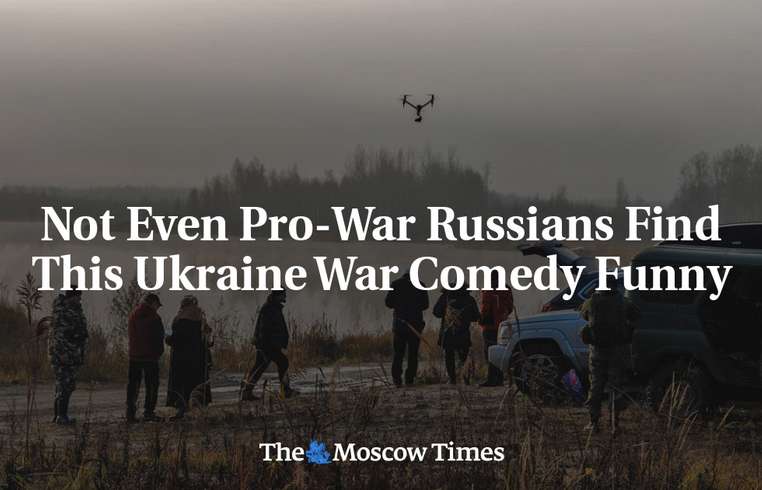
The war in Ukraine presents a more significant challenge for the Kremlin compared to the Chechen conflicts, largely due to the rapid spread of information about atrocities via social media reaching vast audiences. This war has not only permeated Russian media but has also deeply ingrained itself into the fabric of Russian society, acting as a slow-acting poison transforming contemporary reality. Turning the war into comedy aims to alleviate fear by inducing laughter. The new mission of propaganda is to shift public perception from viewing the war as a tragedy to seeing it as a source of humor. The storyline is straightforward: a group of volunteers arrives on the battlefield, led by a seasoned fighter named 'Cuba,' who reluctantly assumes leadership, fulfilling orders despite his disinterest in leading rookies. Their mission: to set up a temporary base amidst ruins, marking the beginning of their daily life under experienced leadership. The series depicts a narrative of cheer and youthful optimism under wise leadership—a departure from the grim experiences of real-life Russian soldiers. The casting choices have attracted attention, notably Alexander Mikhailov's unexpected participation, raising eyebrows given his reputable career. Additionally, actor Vladimir Epifantsev, who was once accused of spreading 'Russophobia' for criticizing the government's military stance, also features in the series. The very idea of portraying war as comedy does not sit well with various high-profile pro-war advocates. Mikhail Ivanov, deputy chair of the World Russian People’s Council and a deputy in the Bryansk Duma, criticized the concept as fundamentally 'flawed and immoral,' arguing against the trivialization of personal loss and grief experienced by soldiers' families. Ivanov's critique is not isolated; it resonates with public sentiment as many have voiced their disagreements. A scathing comment on VKontakte challenges the absurdity of finding amusement amid the grim realities of war, highlighting the lack of firsthand experience in those shaping this narrative. 'The strong public backlash against this offensive portrayal can bring about change,' asserts the VKontakte post. 'The disrespect toward SVO veterans, both living and dead, must not stand!' Despite Kremlin insiders likely advising Ivanov to remain silent lest he find himself accused of 'discrediting the army,' the uproar reflects a broader societal pushback against the distortion of war's genuine hardships.
About usyoo

Categories
Tags