
News - Russia Climbs to Second Place in China's LNG Imports Despite Challenges
Business Strategy
Russia Climbs to Second Place in China's LNG Imports Despite Challenges
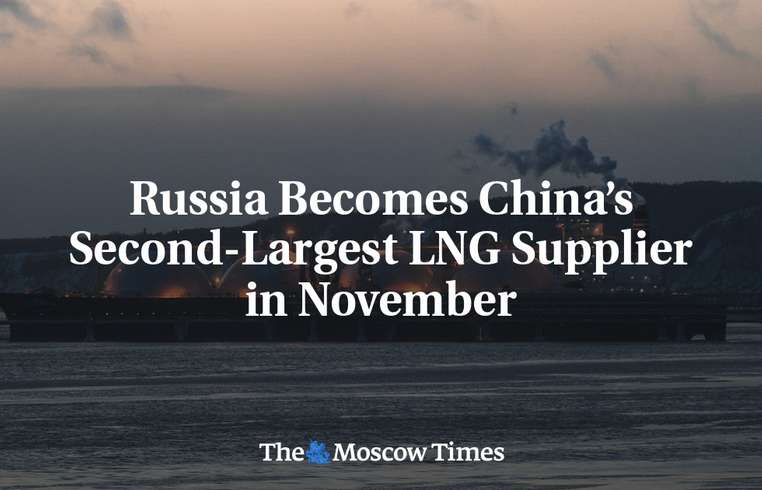
In November, Russia rose to become China's second-largest supplier of liquefied natural gas (LNG), overtaking Australia, with a significant increase in exports. According to Chinese customs data, imports of Russian LNG reached 1.6 million tons, a substantial increase from the previous months and notably higher compared to the previous year's figures. This surge was primarily driven by increased shipments from the Arctic LNG 2 project, led by Novatek, despite Western-imposed sanctions. Russia became the second-largest supplier by shipping more LNG than Australia, which provided China with 1.5 million tons of LNG during the same period. However, Qatar maintained its position as China's top supplier. Arctic LNG 2, operating under sanctions, encountered obstacles but emerged as a crucial component of Russia's LNG export strategy, alongside Yamal LNG, another Novatek project not facing the same level of restrictions. The project utilized Beihai port, which Beijing approved for receiving LNG under sanctions. The influx of Russian LNG comes at a discounted price due to existing sanctions, making it the least expensive among the cargoes supplied by China's 12 LNG exporters. It traded at approximately 10% below the average market price of $9.85 per million British thermal units (mmBtu). Despite November's increase, challenges loom ahead. Production from Arctic LNG 2 was halved in anticipation of the winter season, and Russian exports may slow down before summer due to the inadequate availability of ice-class tankers. Only one Arc7 ice-class tanker, the Christophe de Margerie, is capable of operating through Arctic ice during the harsh months. Attempts by the U.S.-sanctioned Arc4-class tanker Buran to reach Arctic LNG 2 were unsuccessful, as it had to retreat to Murmansk. Russia's LNG export potential remains hampered until ice conditions allow for smoother navigation, likely improving around June. Meanwhile, aspirations for higher Arctic LNG 2 output, with its dual production lines totaling an annual capacity of roughly 13.2 million tons, remain partially untapped, having exported slightly over 1 million tons since June.
About usyoo

Categories
Tags