
News - The ministers' guilt has been laid on the dead fish parasite.
Business Strategy
The ministers' guilt has been laid on the dead fish parasite.
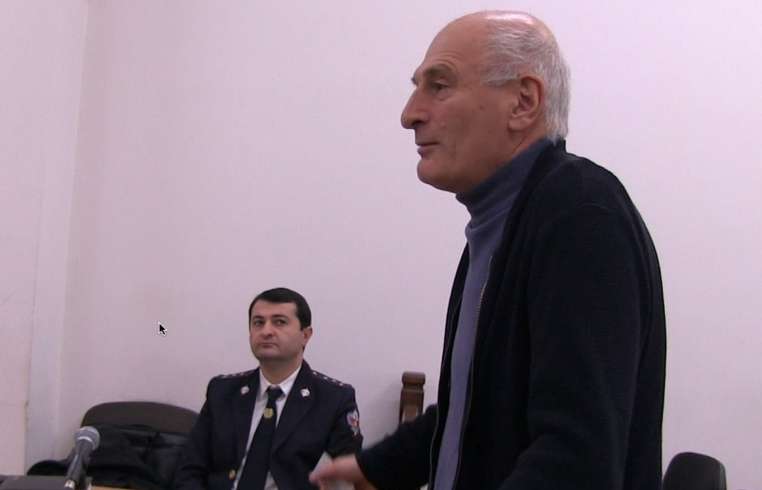
The Prosecutor General's Office is finally examining the 2015 report by environmentalists about a crime to exhaust the Ararat artesian basin. The indictment was brought not against former Environment Ministers Aram Harutyunyan or Vardan Ayvazyan, who allegedly granted water-use licenses exceeding the permissible limit by about 1.6 times between 2003 and 2013 and thereby brought the Ararat field to the brink of desertification, but against a private individual, a Masis-based fish farmer named Kamo Hambardumyan, who died two years ago. In 2003 Hambardumyan's water-use term had expired, but he did not close the bore because the Water Committee demanded 4 million drams to close it, according to his lawyer Davit Davidiyan. The four million was eventually seized and the case closed. The lawyer noted that ten years had passed and Hambardumyan could not pay an additional five million since he had died. The move to reopen the case against Hambardumyan was prompted by environmentalist Levon Galstyan's complaint against the former ministers. Galstyan and other environmentalists in 2015, and again in 2018 after the regime change, appealed to the Prosecutor General's Office and the Investigative Committee to reveal why, during 2008–2013, officials granted water-use licenses exceeding the allowable limit by about 700 million cubic meters, mostly to fish farms. According to the complaint, the officials were connected to the fish farming business. Instead of investigating the corruption chains, however, the Prosecutor's Office reopened 18 individual water-user cases that had been closed and expired, including Hambardumyan's case. As part of this, environmentalist Levon Galstyan was summoned to the Masis seat of the Ararat region court. At the December 3 hearing, the court sought to involve him not only as a witness but also as a plaintiff. Galstyan refused to participate, saying he knew nothing about the man and could not testify, and that his claim concerned the officials. After the session, Galstyan told Epress.am that he was being drawn into cases unknown to him since 2020. He explained that he was brought to the Armavir Investigative, shown papers to acquaint himself with how much various people were fined—one five million, another ten, etc.—but that he was filing charges against the officials. For example, Aram Harutyunyan, who is currently abroad, is alleged to have taken a $14 million bribe from Silva Hambardumyan; another official from the ministry who signed water-use licenses also now works as an independent expert; or Vardan Ayvazyan, who is involved in a case of illicit wealth. The case has been split and loaded onto individual water users—a fish farm, a factory, and a farmer who irrigates. But the issue is systemic: the officials were the owners of these water-taking fish farms, either real or concealed. It is noted that international studies conducted in 2012–2015 found that aggressive water withdrawals in Ararat reduced the artesian pressure by about half, groundwater levels fell to as much as 17 meters, Aygr Lake dried up, the Metsamor River outlet decreased by 10–12 times, and as of 2016 Artesian Basin water reserves had declined by 170 million cubic meters.
About usyoo

Categories
Tags