
-
New York, NY
 HI 58° LO 56°
 HI 58° LO 56°
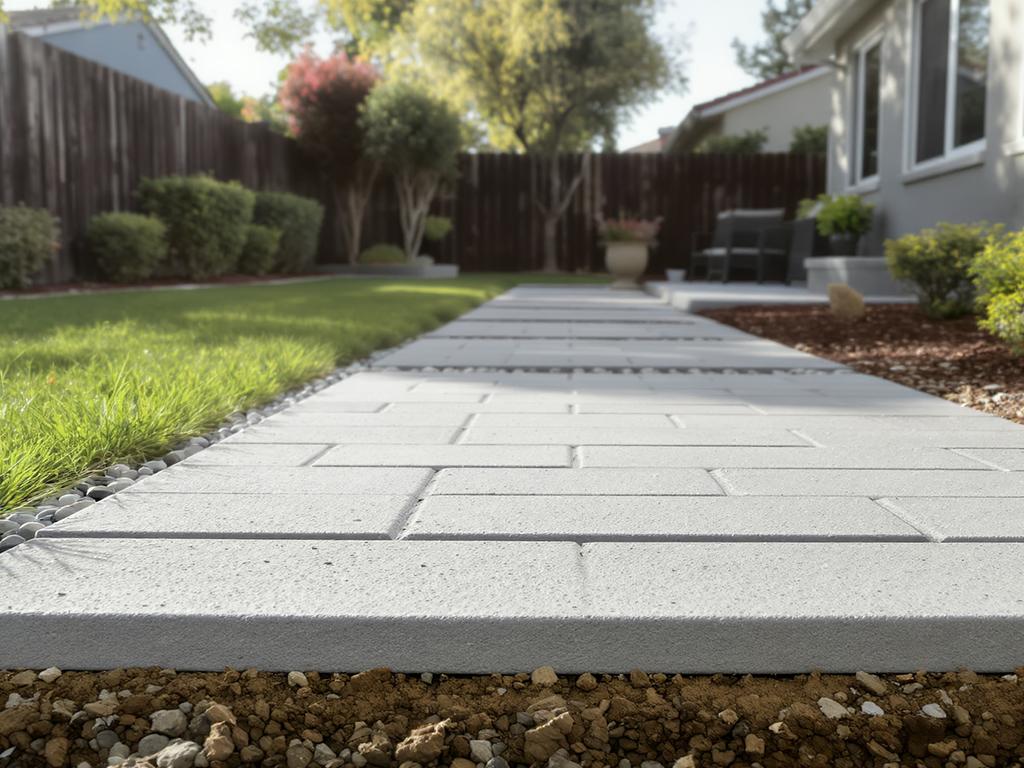
Well-built paths and sidewalks make a yard safer, cleaner, and easier to maintain—especially in Anaheim, where hot weather and occasional heavy rain can stress outdoor surfaces. The key “technology” behind durable walkways is a layered system: stable subgrade, proper drainage, a compacted base, and a finish material chosen for your use case. Start with planning. Mark the route, set the width (typically 36–48 in for main paths), and determine slope: aim for about 1–2% fall away from buildings to prevent water pooling. Excavate to the correct depth based on material—pavers usually need 6–10 in total depth (including base), while poured concrete often requires 4–6 in plus reinforcement depending on soil. Next comes subgrade preparation. Remove organic soil, compact the native ground, and install geotextile fabric if your soil is sandy or prone to shifting. Build the base with crushed stone in 2–3 in lifts, compacting each layer with a plate compactor. This step is critical: most failures (settling, cracks, uneven joints) come from a weak or uneven base. Add drainage and edging. In low spots, consider a French drain or a permeable system. Use rigid edging (metal, concrete, or heavy-duty plastic) to lock pavers and prevent lateral spread. Finish installation depends on the surface. For pavers, spread 1 in of bedding sand, screed level, lay patterns, cut clean edges, compact, then fill joints with polymeric sand for weed resistance. For flagstone, use a compacted base with a mortar or sand-set method. For concrete, use forms, control joints, and rebar or wire mesh to reduce cracking. Finally, seal when appropriate, and maintain with periodic joint refills and spot leveling to keep your outdoor walkways looking sharp for years.