-
New York, NY
 HI 58° LO 56°
 HI 58° LO 56°
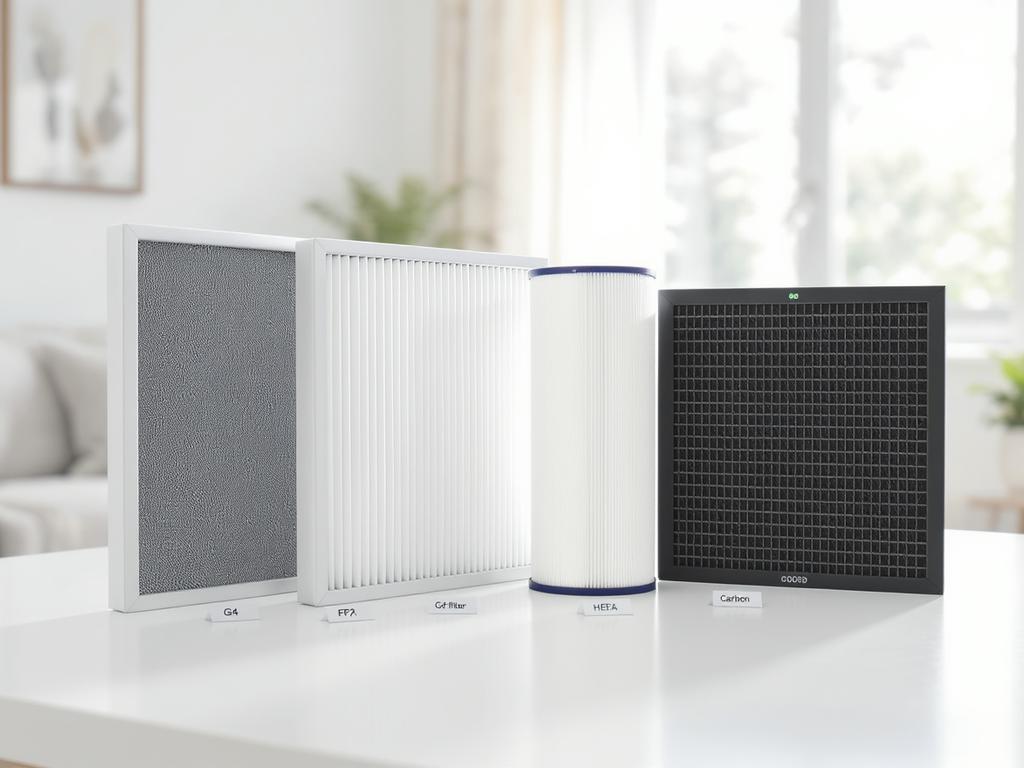
When people talk about “better air” at home or in the office, they often mean fewer particles, fewer allergens, and fewer odors. Ventilation helps by replacing stale indoor air with fresh outdoor air, but filters decide what comes in and what stays out. Understanding the real role of G4, F7, HEPA and activated carbon filters helps you spend money where it makes a measurable difference. G4 is a coarse pre-filter. Its job is to catch large dust, lint and insects, protecting the fan and the main filter. It improves cleanliness and system lifetime, but it is not designed to significantly reduce fine PM2.5 or allergy triggers. F7 (often referred to as fine filtration) is where air quality starts to noticeably improve. It captures a large share of smaller particles such as pollen, road dust and a portion of PM2.5, making it a strong choice for urban areas and for people with seasonal allergies. HEPA goes further: it targets very fine particles, including smoke and many aerosol particles. In practice, HEPA is the best option when your goal is maximum particle reduction (allergies, wildfire smoke, sensitive environments). The trade-off is higher airflow resistance, so the ventilation unit must be sized correctly. Activated carbon filters are different: they don’t “catch dust” well, but they adsorb gases, odors and some VOCs. They are most useful near traffic, restaurants, or whenever smells and chemical pollutants are the main complaint. For best results, use carbon in addition to a particle filter, not instead of one. A practical setup for most ventilation systems is G4 as a pre-filter plus F7 for daily air quality. Add HEPA if you need top-level particle control, and add carbon if odors and gases are a priority. Regular replacement matters as much as the filter grade—because a clogged filter reduces airflow and performance.